
You’ve found a shop in China that can make your parts, the proforma invoice is in your inbox, and now you have to send money to a company you’ve never visited. This page is about how to pay a Chinese supplier without taking on more risk than the order needs: which payment methods protect you against what, why the account name matters so much, how to stage payments on a custom parts order, and the red flags that show up right before a transfer. It isn’t legal or banking advice.
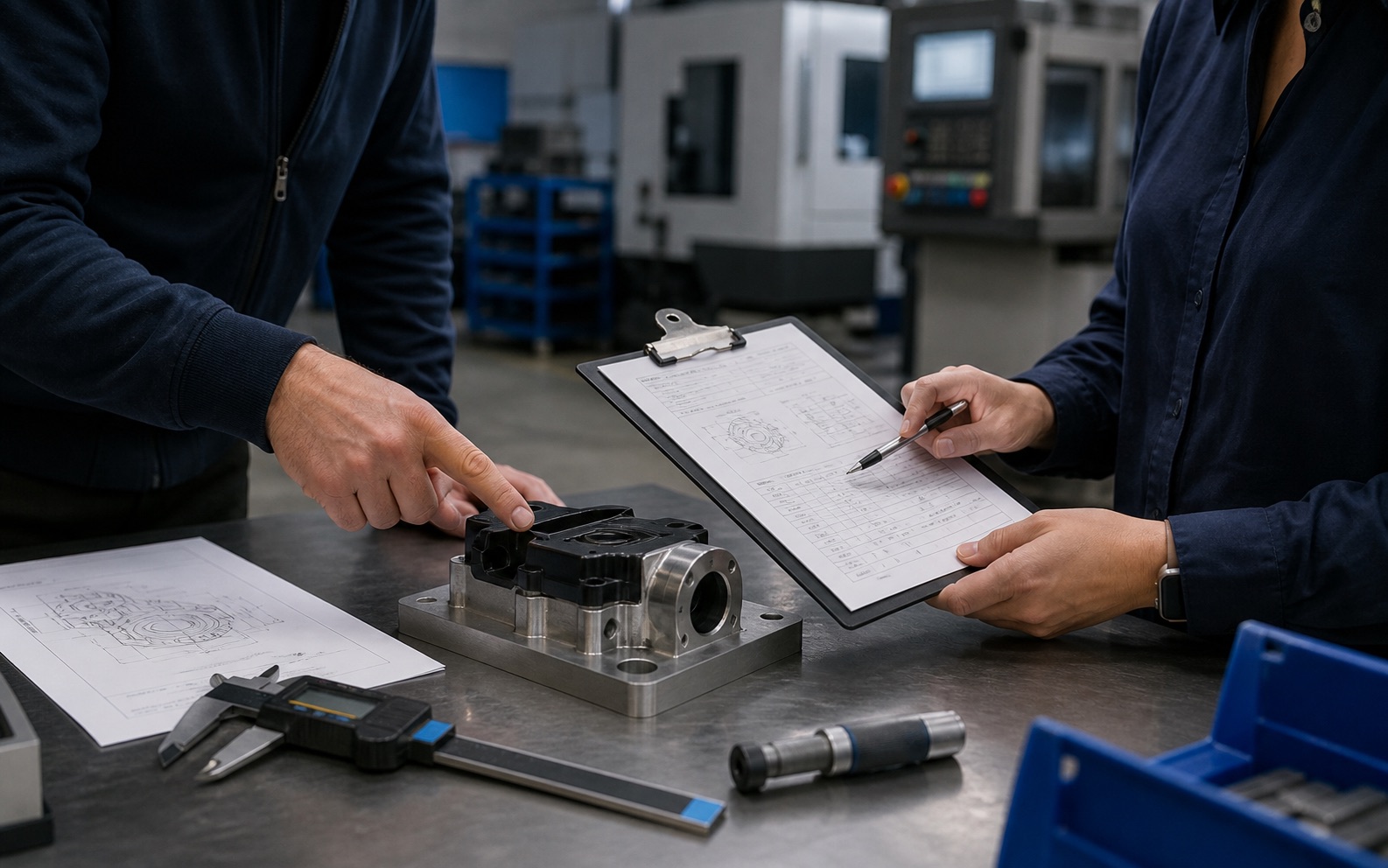
Generic illustration, not a part ProteForm made.
What payment methods do Chinese suppliers actually accept?
Most factories that make custom plastic parts want a bank transfer. You’ll see it written as T/T on the proforma invoice, which just means a telegraphic transfer, an ordinary international wire. It’s what they’re set up for. The catch for you: once a wire lands, you can’t pull it back the way you can dispute a card charge.
The other options each trade cost or flexibility for some protection. None of them checks that your parts are right. That’s still your job, or the job of whoever inspects for you.
So ask what each method protects you against, and what you still have to check yourself.
| Method | What actually protects you | Where it falls short | Where it tends to fit |
|---|---|---|---|
| Bank transfer (T/T) | Your own records: the contract, the proforma invoice, and the SWIFT confirmation (MT103) that shows where the money went | Once it lands, there is no chargeback. If the account was wrong, recovery depends on banks acting fast, and often they can’t | Most custom parts and tooling orders, once the supplier and the account have been checked |
| Letter of credit (L/C) | Your bank pays only when the documents you listed are presented and match the credit | Banks check paper, not parts. Fees, paperwork and discrepancies add time, and many small shops won’t accept one | Larger orders, or buyers whose finance team already runs L/Cs |
| Alibaba Trade Assurance | Alibaba’s dispute process, against the terms written into the order on the platform | Only covers what you put in that order, and only if you paid through the platform. A vague order gives you a vague claim | Samples and first orders with a supplier you found on Alibaba |
| PayPal or card | A dispute process with the payment provider | Fees are often passed on to you. Disputes on custom parts that were made to your drawing can be hard to argue. Some factories refuse it above sample size | Samples, small top-ups, one-off prototypes |
| Third-party escrow | A licensed escrow agent releases funds when the agreed condition is met | Few factories will agree to it for custom work, and you have to verify the escrow company too | Occasional one-off deals with a new party |
When does a letter of credit make sense for a parts order?
An L/C is worth the trouble when the order is big enough that the bank fees and the paperwork are small next to the money at risk, and when your bank already does them for you. Your bank pays the supplier once they present the documents named in the credit, usually an invoice, a packing list and a bill of lading. You can add an inspection certificate from a third-party inspector, and you should. Without it, a supplier can ship the wrong parts, present clean paper, and get paid.
The downside is friction. A mismatch between the invoice and the credit can hold up payment for days, and many smaller molding shops won’t accept an L/C at all, or will price it in. For a modest first order, a bank-transfer schedule tied to inspection is usually more practical.
Is Alibaba Trade Assurance or PayPal enough protection?
Trade Assurance only protects an order that was placed and paid through Alibaba.com, and only to the extent of what’s written in that order. If the order just says “plastic housing,” a claim about wall thickness or color has nothing to stand on. Put the drawing revision, material grade, color, ship date and inspection standard into the order itself. If the supplier asks you to pay “outside the platform to save fees,” you’ve just given up the protection you came for.
PayPal and cards are fine for samples and small one-offs. Expect a surcharge. On a part made to your drawing, a dispute is harder to win than on a retail item, so don’t treat these as insurance on a production run.
Why the bank account name has to match the company you checked
This is the single check that stops the most expensive mistakes. The beneficiary name on the bank details should be the same legal entity that’s on your purchase order and on the proforma invoice. If you haven’t confirmed that entity yet, do that first; we’ve written up how to verify a plastic parts supplier before you pay a deposit, and this page assumes you’ve done it.
A mismatch isn’t always fraud. Plenty of mainland factories invoice through a separate export company, and some use an account in Hong Kong under a related company name. That can be legitimate. What isn’t fine is finding out after you’ve paid. Ask for the structure in writing: who issues the invoice, whose account receives the money, and how that company relates to the factory that will run your part. If they ask you to pay a personal account, an individual’s name, or a company that has nothing to do with anything else on the paperwork, stop there.
Put the PI number in the payment reference and save the SWIFT confirmation from your bank. If something goes wrong later, that document shows exactly where the money went.
Send drawings for a custom parts quote
Send your drawing or model, material, quantity, and any payment or invoicing terms your company requires. We’ll review the design for manufacture, confirm the supplier who would actually make the parts, and only then quote, with a payment schedule written for that project.
How should you stage payments on a custom parts order?
The idea is simple: never have more money out than the evidence you’ve received justifies. On a custom parts order, a common shape is a deposit to start production and a balance before the goods leave, released when you’ve seen something that shows the lot is right. That “something” is the part buyers leave vague. Name it. It might be a dimensional report on the parts you care about, photos of the packed cartons with labels, or a pre-shipment inspection report from an inspector you picked.
You’ll also see suppliers ask for the balance “against a copy of the bill of lading.” That means the goods have already shipped when you pay. That’s a normal arrangement, but it means your quality check has to happen before loading, not after.
If there’s a mold involved, keep the tooling money on its own schedule, with its own trigger, and don’t let it blur into the parts deposit. We cover that in tooling deposit payment terms, including what a deposit does and doesn’t settle about mold ownership. We won’t quote a standard percentage split; a familiar-looking ratio doesn’t make a payment safe.
After a few clean lots, terms often relax. Just don’t relax them because the order is urgent.
What are the red flags just before you pay?
The most common loss we hear about doesn’t involve a bad factory at all. It’s a “new bank details” email. Someone gets into the supplier’s mailbox, or registers a lookalike domain, and sends a normal-looking note: our account has changed, please pay the balance here. The money goes to a stranger.
Treat any change of bank details as unconfirmed until you’ve spoken to someone you already know at the supplier, on a phone number you already had, not one printed in the email asking for the change. A real supplier won’t mind the call.
Other things that should make you slow down:
- Pressure to pay today because “the price goes up tomorrow” or “the machine slot will be gone.”
- A request to pay the full amount up front for a first order of custom parts.
- A beneficiary name that’s an individual, or a company you’ve never seen on any document.
- A proforma invoice that doesn’t mention the drawing revision, material, or quantity you agreed.
How payment works if you send the project to ProteForm
We’re a coordinator, not the factory and not a bank. We review your drawings for manufacture, confirm the supplier who’d actually make the parts, and only then send a quote. The payment schedule comes with that quote, written for that project. If your company has its own required terms, send them with the RFQ and we’ll tell you honestly whether they can be met.
Hold us to the same standard you’d hold a factory to. If you ever get a message that seems to come from us and asks you to pay a different account, call us on a number you already have before you send anything.
When we’re not the right fit
If you’re buying a stock item from a marketplace listing, use the platform’s payment protection; you don’t need us. If you’ve already paid the wrong account, call your bank now and ask them to recall the wire. We can’t recover funds. And if you need someone to hold money in trust between you and a supplier, that’s a licensed escrow service or a bank, not a sourcing coordinator.
What to include in your RFQ
Send the drawing or 3D model with its revision, the material, the quantity for the first order and a rough yearly figure if you have one, and the date you need parts. Add any payment terms or documents your finance team insists on, such as an L/C, a specific inspection report before the balance, or invoicing to a particular entity. For the full list, see what to include in a plastic parts RFQ.
Frequently asked questions
What is the safest way to pay a Chinese supplier?
There isn’t one method that’s safe on its own. A bank transfer is normal and fine once you’ve verified the supplier, matched the account name to the company on your contract, and tied the balance to evidence such as an inspection report. An L/C or Trade Assurance adds a dispute or document check, but neither one inspects your parts.
Is it normal for a Chinese factory to ask for a deposit?
Yes. A deposit to start production, and a separate one for any tooling, is normal on custom parts. Full payment up front for a first custom order is not something you should accept without a very good reason. Ask what each payment covers and what triggers the balance.
Why does the bank account show a different company name?
Sometimes a factory invoices through a related export company or an account in Hong Kong, and that can be legitimate. Ask for the structure in writing before you pay. A personal account, or a company unrelated to the invoice and contract, is a reason to stop.
What should I do if a supplier emails new bank details?
Don’t pay until you’ve confirmed the change by phone with someone you already know there, using a number you had before the email arrived. Changed bank details are the classic sign of a hacked or spoofed mailbox.
Can I pay ProteForm by L/C or through a platform?
Tell us what your company requires when you send the RFQ. We’ll say whether it can be worked to for that project after we’ve confirmed the supplier. We won’t promise a payment method before we’ve seen the job.
Send drawings for a custom parts quote
Send your drawing or model, material, quantity, and any payment or invoicing terms your company requires. We’ll review the design for manufacture, confirm the supplier who would actually make the parts, and only then quote, with a payment schedule written for that project.