
You’re looking at a tooling quote from a shop in China, and the deposit and the balance are not explained in the same way as the piece price. Tooling deposit payment terms in China are often written separately from first production, and they are easy to treat as a formality until something stalls. This page is about what you should get in writing, what a deposit does and does not settle, and how payment ties to mold ownership. It is not legal advice, and it is not our standard terms.
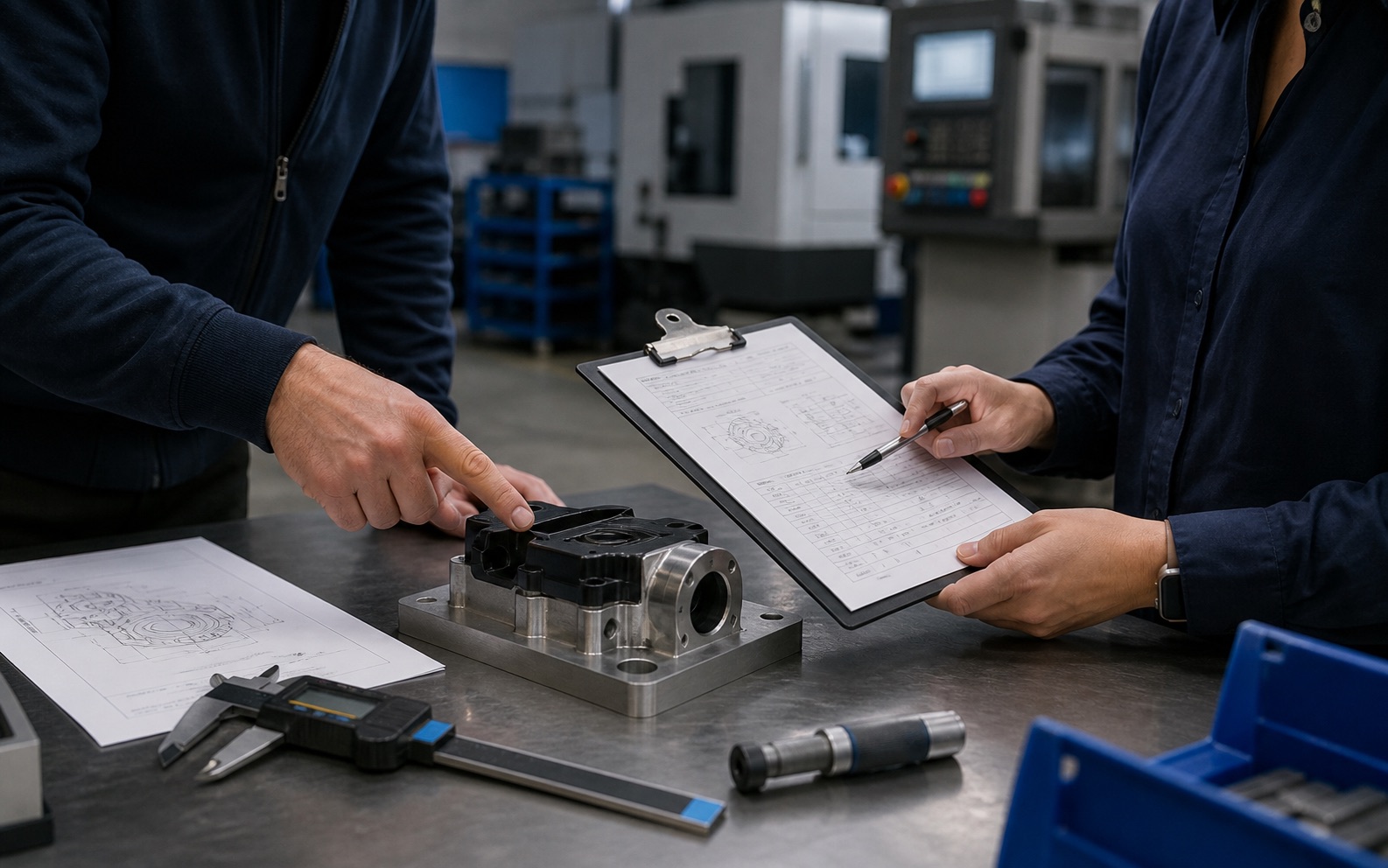
Generic illustration, not a part ProteForm made.
What payment terms do buyers usually see for tooling and first production?
On a custom mold made in China, you will often be looking at two commercial conversations at once: one for the tool, and one for the first production lot. Tooling deposit payment terms in China are commonly written as a deposit to start the mold and a later balance tied to a named event, such as T1 samples, written sample approval, or release of the tool. First production is usually a different schedule: a deposit or a progress payment to start the lot, and a balance tied to inspection or to shipment under the terms you agreed.
Those patterns are familiar. They are not a rule of the trade, and they are not ProteForm’s terms. Treat whatever split or trigger you are shown as a proposal to confirm for this tool and this order. The useful work is naming what each payment is for, when it is due, what evidence releases the next payment, and what remains unfinished if you stop after the deposit.
Why the mold and the first lot should have separate terms
A mold is an asset. It has a design, a steel type, a cavity count, a planned life, and a storage location. The first production lot is a delivery of parts, with a quantity, a revision, an inspection plan, and a ship date. If you fold both into one undefined payment, it becomes hard to say what you have already paid for when T1 is late, when the first lot is short, or when you want to pause after the tool is cut.
Separate terms also keep the arguments in the right place. A dimensional miss on T1 is a tooling and sample issue. A scratch in a carton is a production and packing issue. Mixing the invoices does not make either problem easier to close. You can still put two schedules on one set of documents. For how tool cost and piece price should be compared, see tooling cost versus unit price and what drives the price of an injection mold.
| This payment | Usually relates to | Does not, by itself, settle |
|---|---|---|
| A tooling deposit, paid after you accept the tool quote | Starting work on a named tool, once the commercial paper is in place | Mold ownership, the right to move the tool, or approval of the first production lot |
| A tooling balance, tied to a named sample or approval event | The remainder of the agreed tool price, if that event and the evidence you named have been met | Open design changes, extra cavities, or work that was never in the accepted quote |
| A deposit or progress payment on first production | Resin, machine time and the first lot, on the schedule you accepted | Tool ownership, or a waiver of inspection before the lot ships |
| A balance on first production, often before or after shipment under the agreed terms | The remaining piece price and any agreed packing or freight that sits in that invoice | A later lot, a revision, or a quality claim you have not yet reviewed |
Send drawings for a tooling and first-production quote
Send the model or drawing, material, the quantity you expect for the first lot, and any payment or ownership conditions your company already requires. We’ll review the design for manufacture, confirm which supplier would make the tool and the parts, and only then quote. A payment schedule that is not tied to a confirmed supplier is not a quote you can use.
What a tooling deposit actually covers, and what it does not
A tooling deposit is usually the shop’s condition for starting work: tool design, steel, electrodes, and machine time. What it covers is whatever the accepted quote and the purchase documents say it covers. If those papers are silent, you have paid to start work, and you have not clearly bought a finished, approved, movable asset.
A deposit does not, on its own, mean you own the mold, approve T1, authorize a later design change, or set the terms for the first production lot. It also does not replace a check on who the supplier actually is. If you have not yet confirmed the shop, stop and read how to verify a plastic parts supplier before you pay a deposit before any money moves. The same caution applies to a production deposit: paying to start a first lot does not waive inspection, freeze an unsigned revision, or decide who pays if the lot fails and has to be remade.
What to get in writing before you pay
Write the commercial terms so a third person could read them in six months and know what was due. At a minimum, confirm:
- Two schedules, or a clearly itemized single document: tool price and first-production price, each with its own deposit, balance, and trigger.
- The event that releases each balance: a named sample stage, written approval, pre-shipment inspection, or shipment under named terms. “When the mold is finished” is not an event you can test.
- The evidence that accompanies that event: photos, a dimension report, a signed sample approval, a packing list, or an inspection record. Name the document, rather than only the date.
- What happens if the event is late, failed, or only partly met: whether a partial payment is due, whether rework is included, and how a rejected lot is handled.
- The revision of the part and of the tool the quote was based on, and how a later design change is priced and timed.
- Ownership, storage, maintenance, and the right to move the tool, in language that matches who owns the mold. If a later move is possible, the same paper should not fight a future mold transfer.
- The company name, bank details, and invoice entity you are paying, checked against the supplier you verified, not against a name that appeared only on a chat screen.
Payment method is a separate practical point. Bank transfer is common, and other methods exist. This page is not a guide to how you should pay, and we will not invent fees or a preferred instrument. For the methods themselves (bank transfer, L/C, platform protection, escrow) and how to check the account before money moves, see how to pay a Chinese supplier without unnecessary risk. Use a method your company can audit, and keep the remittance with the accepted quote. None of this is a legal opinion about your contract. If ownership or security over the steel matters, have your counsel review the paper. We will not draft or interpret it as if we were your lawyer.
Payment-risk hygiene before the first transfer
Terms on a PDF do not fix a weak supplier. Confirm the shop, the tool location, and the invoice entity before the deposit, not after. Match the account name to the company you verified, and keep the accepted quote, the purchase document, and the remittance in one file. If a balance is tied to T1, do not release it on a verbal “looks fine”; keep the approval with the drawing revision. Our mold acceptance checklist lists the samples, tool checks and documents to have in hand before the final tooling payment. Be slow to prepay a first lot that has not been sampled, or to combine a tooling balance with a large production deposit in one transfer you cannot later unwind.
How this works if you send the project to ProteForm
We work with a network of factories in China we know well. We’re not a bank, though. We go through your files, tell you which factory would make it, and only then quote the tool and the first lot. The payment schedule you see will be written against that project, not a published company split. If your company has required terms, send them with the request a quote. We will tell you whether they can be worked to. We will not invent a ratio to make a draft look complete, and we will not tell you a deposit is safe because the percentages look familiar.
When we are not the right fit
If you need a lawyer to draft payment terms, a security interest over a mold, or to recover a deposit already in dispute, that is legal work. We will not do it. If you want a standard split quoted before we have seen a drawing or confirmed a supplier, we will decline; a schedule that is not tied to a named tool is not something we will pretend is firm. And if you only need a catalog part and there is no custom tool, a tooling-deposit discussion is the wrong conversation.
What to include in an RFQ
- The model or drawing, the revision, material, and the quantity you expect for the first lot.
- Whether you are quoting a new tool, a change to an existing tool, or parts off a tool you already have.
- Any payment, ownership, or storage conditions your company already requires, in your own wording.
- The duty of the part, and any sample or inspection step you already know you will use to accept the tool or the lot.
Frequently asked questions
Are there standard tooling deposit payment terms in China?
No single split is a rule of the trade, and none of the patterns you will hear is ProteForm’s standard terms. A shop may propose a deposit and a later balance, sometimes tied to T1 samples or to shipment of the first lot. Confirm that proposal in writing for this tool and this order. Do not assume the next quote will use the same split.
Should tooling and first production be paid on the same schedule?
Usually they should be written as two schedules, even if the same shop is doing both. The mold has its own acceptance points. The first lot has its own quantity, inspection and ship terms. Combining them into one undefined payment is how a balance argument starts when samples are late or the first lot is short.
Does paying a tooling deposit mean I own the mold?
No. Payment and ownership are related, but they are not the same thing. Ownership, storage, the right to move the tool, and what happens if you stop the project should be stated in the purchasing documents. Read who owns the mold before you treat a deposit receipt as title.
When is the tooling balance usually due?
You will see balances proposed after a named sample stage, after written sample approval, or before the tool is shipped or released for production. There is no date you should treat as standard. Name the event, the evidence you need (photos, a dimension report, a signed approval), and what happens if that event is late or failed.
Does ProteForm have a fixed payment split you can quote me now?
No. We do not publish a standard deposit ratio, and we will not invent one so a quote looks tidy. After a DFM review and a confirmed supplier, the payment schedule for the tool and for first production is written against that project. If you have terms your company requires, send them with the RFQ so we can tell you whether they can be worked to.
Send drawings for a tooling and first-production quote
Send the model or drawing, material, the quantity you expect for the first lot, and any payment or ownership conditions your company already requires. We’ll review the design for manufacture, confirm which supplier would make the tool and the parts, and only then quote. A payment schedule that is not tied to a confirmed supplier is not a quote you can use.